

Therapy for men
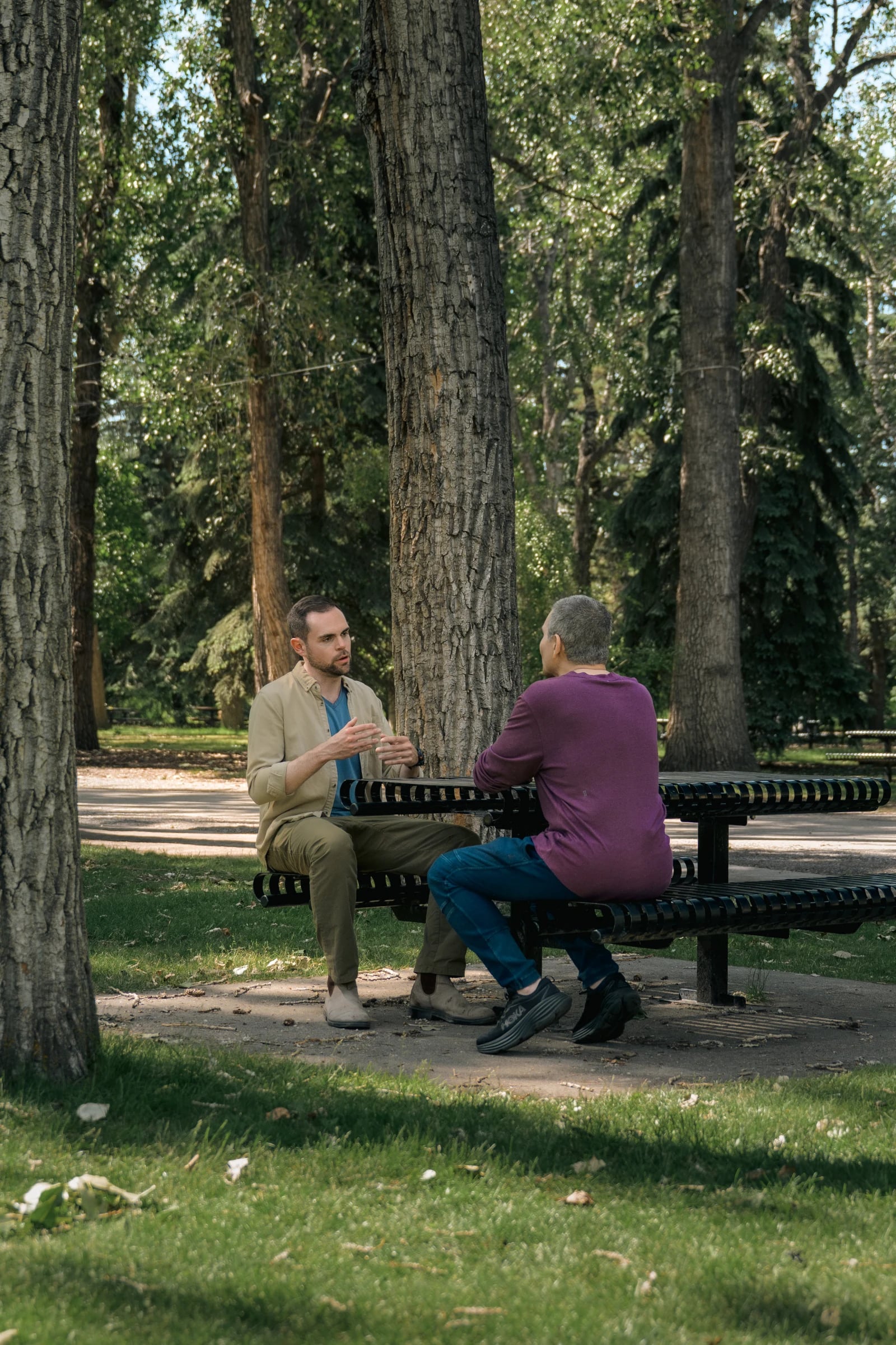
Practical, confidential support for men navigating stress, anxiety, burnout, relationships, and life transitions through therapy for men in Calgary. Sessions are available in-person through outdoor walk-and-talk therapy or secure online counselling, designed to meet you where you are, mentally and practically.
As a male therapist in Calgary, my approach to men's mental health is built around clarity, movement, and real-world application, not clinical overwhelm or overcomplicated processes.
Why men's mental health matters
Traditional masculine norms can emphasize stoicism, self-reliance, and emotional restriction, making it harder to ask for support (Levant & Wong, 2017). Gender role conflict and restrictive emotionality are linked to poorer mental health outcomes.
These patterns are learned — not fixed. Therapy offers a practical way for men to understand what is happening and choose what comes next with a clear vision.
75% of suicide deaths
4th leading cause of premature death & 2nd leading cause of death for men aged 15–34
Depression often missed
23% of Canadian men have moderate-to-severe depression. Depression is often missed in men who present with irritability, anger, risk-taking, and/or substance use.
Less likely to seek help
Men seek help less often when stoicism and self-reliance leave little room for vulnerability. 67% of Canadian men have never utilized mental health services.
Areas of Focus
You do not need a diagnosis or a crisis to begin. We can start with whatever is getting in the way right now.
Stress
High-pressure work environments, financial responsibility, and constant expectations can quietly build overwhelm over time. In my therapy session, we focus on identifying pressure patterns, resetting your baseline calm, and building practical ways to manage stress before it compounds.
Anxiety
Anxiety often shows up as overthinking, restlessness, or physical tension that doesn't switch off. Michael, helps you understand triggers, regulate your nervous system, and reduce the mental noise that keeps you stuck in cycles of worry.
Depression
Low energy, disconnection, and loss of motivation are more common than most men talk about. Through Snow Psychology we focus on breaking inertia gradually, rebuilding structure, and reconnecting you with purpose in a way that feels achievable, not overwhelming.
Relationships
Communication breakdowns, emotional distance, and conflict are often symptoms of deeper stress. Michael’s focus on therapy for men supports them in improving communication, setting boundaries, and building stronger, more stable connections with partners, family, and people around you.
Grief & Loss
Addressing systemic fatigue, lack of motivation, and the heavy feeling of working on empty for too long.
Burnout
Burnout isn't just tiredness; it's long-term depletion. Whether it's work, relationships, or personal pressure, therapy helps you rebuild energy reserves, set boundaries, and recover without guilt or pressure to 'bounce back' instantly.
Life Transitions
Navigating major shifts like career pivots, divorce, or mid-life adjustments with clear sense of self and practical direction.
Anger Management
Understanding the triggers and somatic responses associated with old wounds and emotional reactive patterns.

Meet your therapist, Michael
Michael is Canadian Certified Counsellor (CCC) who takes a clinically evidence based approach in his therapy session. He also creates a more causal judgment-free, confidential space where you can be direct, take your time, and work toward goals that matter most to you. The therapy sessions are framed as a strength-based and goal-oriented process.
CBT adapted for men
Cognitive Behavioral Therapy helps make patterns visible and builds practical tools for changing how you respond.
Acceptance & Commitment Therapy
ACT creates room for difficult thoughts and feelings while reconnecting choices to your values.
Solution-focused work
Clear goals, useful experiments, and forward movement respect a preference for action-oriented work.
What the Research Says

Barriers to Help-Seeking
Research consistently shows that traditional masculine norms—self-reliance, emotional control, and stigma around vulnerability—are the strongest predictors of men's reluctance to seek mental health support. Men are significantly less likely than women to access psychological therapy, despite comparable rates of distress (Seidler et al., 2016; Addis & Mahalik, 2003).

Tailored Approaches Improve Outcomes
A systematic review found that therapy adapted to be 'male-sensitive'—incorporating action-oriented techniques, flexible settings, and language that resonates with men—significantly improves engagement and outcomes. Brief, goal-focused interventions and outdoor or activity-based formats reduce dropout rates and improve symptom reduction in male clients (Seidler et al., 2018; Ogrodniczuk et al., 2016).

Physical Activity as Therapeutic Catalyst
Meta-analytic evidence demonstrates that exercise-integrated therapy produces clinically meaningful reductions in depression and anxiety symptoms in men, with effect sizes comparable to pharmacotherapy. Physical activity during sessions may lower psychological defenses, facilitate emotional expression, and strengthen the therapeutic alliance (Schuch et al., 2016; Craft & Perna, 2004).
References
- Addis, M. E., & Mahalik, J. R. (2003). Men, masculinity, and the contexts of help seeking. American Psychologist, 58(1), 5–14. https://doi.org/10.1037/0003-066X.58.1.5
- Craft, L. L., & Perna, F. M. (2004). The benefits of exercise for the clinically depressed. Primary Care Companion to the Journal of Clinical Psychiatry, 6(3), 104–111. https://doi.org/10.4088/PCC.v06n0301
- Ogrodniczuk, J. S., Oliffe, J. L., Kuhl, D., & Gross, P. A. (2016). Men’s mental health: Spaces and places that work for men. Canadian Family Physician, 62(6), 463–464.
- Schuch, F. B., Vancampfort, D., Richards, J., Rosenbaum, S., Ward, P. B., & Stubbs, B. (2016). Exercise as a treatment for depression: A meta-analysis adjusting for publication bias. Journal of Psychiatric Research, 77, 42–51. https://doi.org/10.1016/j.jpsychires.2016.02.023
- Seidler, Z. E., Dawes, A. J., Rice, S. M., Oliffe, J. L., & Dhillon, H. M. (2016). The role of masculinity in men’s help-seeking for depression: A systematic review. Clinical Psychology Review, 49, 106–118. https://doi.org/10.1016/j.cpr.2016.09.002
- Seidler, Z. E., Rice, S. M., Ogrodniczuk, J. S., Oliffe, J. L., & Dhillon, H. M. (2018). Engaging men in psychological treatment: A scoping review. American Journal of Men’s Health, 12(6), 1882–1900. https://doi.org/10.1177/1557988318792157
Seeking help is a sign of strength, not weakness
Practical Tools You Can Use
This isn't just talking, it's building tools that work in real life. You'll leave sessions with practical strategies that can be applied immediately to work, relationships, and personal challenges. This includes techniques for managing stress responses, improving emotional regulation, and making clearer decisions under pressure.
Safe Space, No Judgment
Men often feel pressure to appear composed even when things feel overwhelming internally. This space removes that expectation. In session you're free to speak openly about stress, anger, fear, or uncertainty without being judged or labeled.
Action-Oriented Process
Therapy here is structured around movement, not stagnation. We work collaboratively to set clear goals, track progress, and adjust based on what's actually working. This ensures therapy is active, not passive, and always moving toward measurable change. Michael doesn't just listen, they help you build a clearer path forward.
Have a question first?
Send a message about logistics, coverage, or anything else — answered within two business days. To get started, the fastest path is still a free 20-minute consult.
This inbox isn't monitored in real time and isn't a crisis service. If you're in crisis or immediate danger: call 911, call or text 988 (Suicide Crisis Helpline, 24/7), or call the Distress Centre Calgary at 403-266-4357.

You do not have to figure it out alone
Book a free, no-pressure 20-minute consultation to see whether Michael's approach feels right for you.
 587-327-3465